
Astro Cut Its Open Issues From 200 to 20 With 4 AI Agents — And Cloudflare Just Open-Sourced It
Cloudflare released triagebot-action, the 4-agent AI pipeline that reduced Astro's open GitHub issues from 200+ to near-zero. How it works, what it means for framework maintenance, and why agencies should pay attention.
Astro Cut Its Open Issues From 200 to 20 With 4 AI Agents — And Cloudflare Just Open-Sourced It
Astro, the JavaScript framework for content-heavy websites, had over 200 open issues at the start of 2026. Now it has 20. The culprit is a pipeline of 4 AI agents that reproduces bugs, diagnoses root causes, and proposes fixes — all without human intervention until the merge. Cloudflare, which acquired Astro's parent company in January, open-sourced the system on September 10 as triagebot-action.
If you maintain or depend on open-source frameworks (and nearly every agency does), this changes the maintenance equation. And if you're already evaluating a headless CMS for your stack, the triagebot-agent pattern is exactly the kind of architecture you'll see in the next generation of agentic CMS platforms.
The 4-agent pipeline — how it actually works
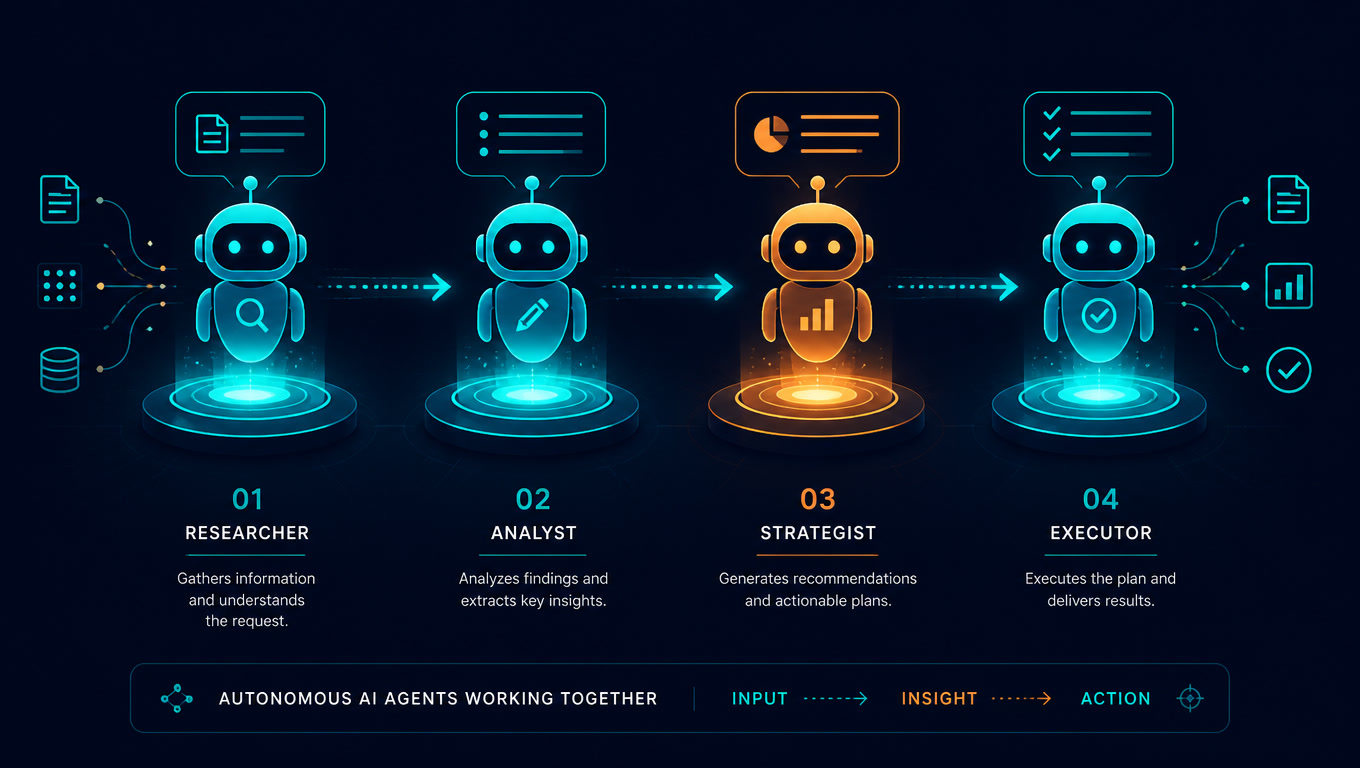
When someone opens an issue on Astro's repository, triagebot-action runs a sequence of 4 stages, each handled by an independent AI agent:
- Reproduces — The agent executes the reported bug in an isolated sandbox. It doesn't trust the reporter's description; it verifies the problem is real.
- Diagnoses — A second agent analyzes the root cause of the reproduced bug. It doesn't attempt a fix yet; it just identifies what's broken and why.
- Verifies — A third agent confirms that what was diagnosed is actually a bug, not expected behavior or a reporter misunderstanding.
- Fixes — The fourth agent writes a patch and generates a preview release for the reporter to test.
The architectural key: every transition between stages is encoded as a GitHub label. Anyone can open an issue and see exactly what stage it's in and why. There's no black box. The system is an explicit state machine, not a monolithic agent that "does everything."
Fred Schott, Astro co-founder and now senior engineering manager at Cloudflare: "Fix is always the hardest because the bar is so high. Triage and handoff to a human is still a pretty great outcome without the fix step."
The pattern that matters: explicit handoffs, not autonomous loops
What makes triagebot-action different from most agent implementations is its architecture of explicit handoffs with persistent state. Each agent has a bounded task, receives limited context (deliberately, they don't share context with each other), and passes results to the next through GitHub labels.
This isn't accidental. The Astro team discovered that agents work better when they:
- Don't share context — A diagnosing agent doesn't see the reproducing agent's conclusions. This prevents it from parroting the previous agent's findings instead of doing its own analysis.
- Have bounded tasks — Each agent does one thing well. The reproducing agent doesn't fix; the diagnosing agent doesn't reproduce.
- Pass through a human gate before merge — The fixing agent generates a preview, the reporter confirms, and only then is a PR opened.
The underlying framework, Flue, is open-source and designed to run on any infrastructure without Cloudflare dependency. If you're building agent pipelines for anything other than GitHub issues, Flue's pattern (explicit handoffs, state machines in labels, isolated sandbox per stage) is a serious blueprint.
Why agencies should pay attention
In our recent WordPress-to-Astro migration with Cloudflare Pages, one reality we face is the volume of issues that open-source frameworks accumulate. It's not just Astro — it's Next.js, Nuxt, SvelteKit, and every library in your package.json.
Three data points converge to make this relevant for agencies:
- Open issue volume is growing faster than maintainer capacity. AI coding tools have made it trivially easy to generate bug reports, unreviewed patches, and speculative vulnerability write-ups. The problem isn't more bugs — it's more noise.
- The triagebot-action pipeline filters noise before it reaches a human. Instead of a maintainer reading 200 issues and discovering 140 are duplicates, non-reproducible, or expected behavior, the agent does that work.
- The pattern is transferable. If you have any internal system with issues — a client repository, a bug backlog, or a QA pipeline — Flue's architecture (bounded agents + explicit handoffs + human gates) is a template.
The data point that's not in the headlines
Cloudflare also released pvcli, a command-line debugger "explicitly designed for agent-based debugging." Two tools in one week, both built so that AI agents are the primary users.
This isn't a marketing feature. It's an architectural direction: Cloudflare is building tools whose primary user isn't a human writing code, but an AI agent executing tasks. When your infrastructure provider optimizes for agents, the way you build your stack changes.
If your agency already depends on Astro and Cloudflare for client sites, it's worth following triagebot-action and Flue closely. Not as a technical curiosity, but as a signal of what type of agents will be interacting with your stack over the next 12 months.
Decision framework: when to adopt triagebot-action
| Criterion | Adopt now | Wait |
|---|---|---|
| Open issue volume | 50+ active | Under 20 active |
| Maintainer team | 1-3 people | 5+ people |
| Project type | Framework/library used by others | Internal application |
| Tolerance for auto-fixes | High (with human gate) | Low (all manual) |
| Stack | GitHub Actions available | Other CI/CD |
The system is optimized for the case where you have few maintainers and lots of noise. If you're an agency maintaining 3-4 client repos, triagebot-action may be overkill. If you maintain an internal library or framework, it's a massive time saver.
Published September 15, 2026. Sources verified: The New Stack (Sep 2026), Cloudflare Blog (Sep 10, 2026), direct Fred Schott quotes.
Frequently Asked Questions
What is triagebot-action?
triagebot-action is an open-source GitHub Action from Cloudflare that runs a 4-agent AI pipeline when someone opens an issue: it reproduces the bug in a sandbox, diagnoses the root cause, verifies it's an actual bug, and attempts a fix. Each stage is an independent agent controlled by a state machine encoded in GitHub labels.
What is Flue and how does it relate to triagebot-action?
Flue is the underlying durable agent framework for triagebot-action. It was designed to run on any infrastructure with no Cloudflare-specific dependencies. The key difference is that Flue manages explicit handoffs between agents with persistent state, rather than relying on autonomous agent loops.
Can I use triagebot-action on my own repos?
Yes — Cloudflare open-sourced it on September 10, 2026. It works as a standard GitHub Action. However, in practice only Astro runs it in production at the time of writing. Cloudflare is prototyping it internally on workers-sdk. The Flue framework is also available for general use.