
What is a CRM and why should I have one?
What is a CRM and why should I have one?
Definition of CRM
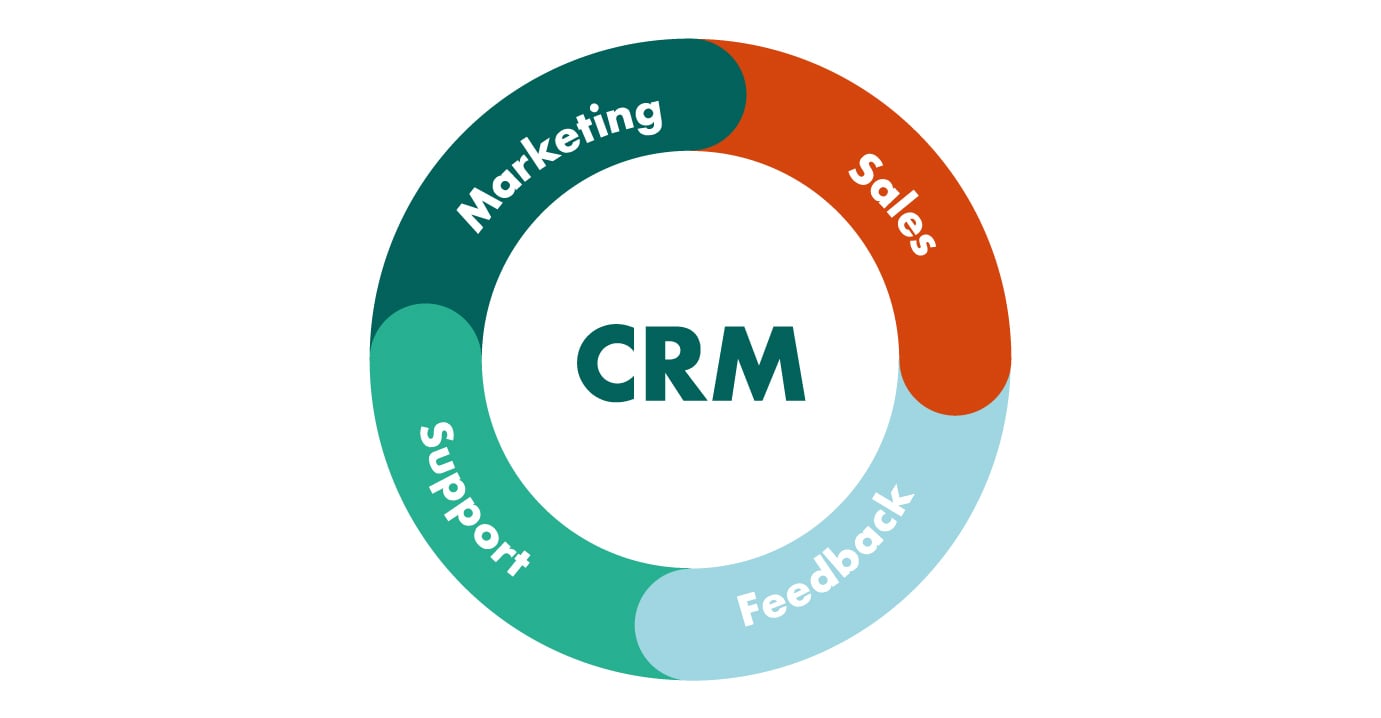
A CRM, or Customer Relationship Management, is a technological tool designed to manage customer service and interactions of a company with its customers and potential customers.
This platform centralizes all sales processes and all relevant information, such as purchase history, previous communications, and preferences, allowing companies to improve their customer service, increase satisfaction and loyalty, and optimize sales and marketing strategies.
In an increasingly competitive environment, having a CRM is essential for managing customer relationships in a solid and personalized way, driving business growth and success.
Benefits of Having a CRM
Improves Sales Management
One of the most significant benefits of implementing a CRM is the improvement in sales management. A CRM allows companies to keep detailed control of all stages of the sales cycle, from identifying a potential customer to closing a sale. Thanks to the ability to centralize contact information, activities, and communications, sales teams can access up-to-date data in real-time, facilitating informed decision-making.
For example, Clientify offers advanced functionalities that allow tracking customer behavior and accurately forecasting future sales opportunities, helping sellers prioritize their efforts and close more deals.
Enhances Customer Service
Customer service is a critical component for any business, and a CRM can completely transform this area.
By centralizing customer information, customer service representatives can quickly access interaction histories, preferences, and previous issues, allowing them to provide quick and personalized solutions.
This not only improves customer satisfaction but also strengthens long-term relationships with customers. A well-implemented CRM ensures that every interaction with the customer is consistent and of high quality, resulting in an exceptional customer experience.
Automation of Business Processes
Automation is another great benefit of CRMs. With a CRM system, companies can automate repetitive and administrative tasks, freeing up time for their sales team to focus on higher-value activities.
For example, automating follow-up emails, scheduling appointments, and generating sales reports are some of the tasks that can be managed automatically by a CRM.
Clientify, for instance, allows setting up custom automations that are triggered based on customer business actions, such as opening an email or visiting the website, improving the efficiency and effectiveness of the sales team.
Customer Segmentation and Personalization
Customer segmentation is fundamental to any effective marketing and sales strategy. A CRM allows segmenting the database of interested customers based on various criteria, such as purchasing behavior, preferences, and demographics.
This precise segmentation enables small businesses to personalize their communications and offers, increasing the relevance and effectiveness of their campaigns.
By better understanding their current customers, small businesses can design strategies more tailored to the needs and desires of each segment, resulting in a higher conversion and retention rate.
Reporting and Data Analysis
Data analysis and reporting are essential for understanding the performance of sales strategies and making decisions based on important data.
A CRM provides analytical tools that allow visualizing and evaluating the effectiveness of sales and marketing activities. These reports can include metrics such as sales team performance, sales cycle, conversion rates, and return on investment of the marketing strategy.
Thanks to these analyses, medium-sized companies can identify areas for improvement and adjust their strategies to maximize results.
The different types of detailed reports and visual graphs help managers better understand trends and customer behavior, facilitating more informed and strategic decision-making.
In summary, a CRM offers a wide range of benefits that can transform the way a company leverages customer relationship management. From improving the efficiency of the sales team and customer service to automating processes and providing detailed analytics, a CRM is an indispensable tool for any company looking to grow and thrive in a competitive environment.
If you are interested in discovering how a CRM like Clientify can help you achieve these benefits, do not hesitate to contact us By Clicking Here for a personalized consultation.
Key Features of a CRM
Contact and Lead Management
One of the most important features of a CRM is the ability to manage contacts and leads efficiently.
This management tool centralizes all relevant information about contacts, such as personal data, email addresses, phone numbers, previous interactions, and personalized notes.
Additionally, it allows classifying and segmenting contacts based on different criteria, facilitating the personalization of communication strategies. With a CRM, companies can quickly identify the most promising leads and prioritize their sales efforts, ensuring that no valuable opportunities are missed.
Sales Tracking and Business Opportunities
Tracking sales and business opportunities is another key feature of CRMs. This module allows sales teams to record and monitor each stage of the sales process, from lead generation to closing the sale. By providing a clear and structured view of the sales pipeline, a CRM helps sellers stay organized and focus their efforts on the opportunities with the highest potential for success. Additionally, the CRM can generate automatic alerts and reminders to ensure that no opportunity is lost due to lack of follow-up. For example, tools like Clientify offer advanced functionalities to track the progress of each opportunity, allowing sales teams to adjust their strategies in real-time and increase their closing rates.
Task and Sales Team Management
Task and sales team management is essential to ensure operational efficiency and collaboration within the team. A CRM facilitates the assignment of tasks and responsibilities to each team member, ensuring that everyone is aware of their duties and deadlines. Additionally, it allows the creation of customized workflows that adapt to the specific needs of the business. By centralizing information and activities of the sales team, the CRM improves coordination and communication, resulting in more consistent and effective performance. This functionality is especially useful for companies with geographically distributed sales teams, as it allows for effective remote supervision and management.
Integration with Marketing Tools and Social Media
Integration with marketing tools and social media is another fundamental feature of modern CRMs. This integration allows companies to synchronize their sales and marketing efforts, creating a more coherent and personalized customer experience. For example, a CRM can connect with email marketing platforms, marketing automation, and social media to gather customer behavior data and adjust campaigns accordingly. This not only improves the effectiveness of marketing campaigns but also provides sales teams with valuable information about customer interactions and preferences. In the case of Clientify, the platform allows seamless integration with various marketing tools and social media, facilitating the creation of multichannel campaigns that maximize reach and impact.
Access to Updated and Personalized Data
Access to updated and personalized data is crucial for making informed and quick decisions. A CRM provides users with real-time access to data management, influencing the most recent information about customers and business opportunities.
This includes a database with contacts, interaction history, opportunity status, and much more. Additionally, it allows the customization of report types and dashboards, adapting them to the specific needs of each user or team. By having accurate and updated data, sales and marketing teams can proactively adjust their strategies and respond quickly to changing market needs. This ability to customize and constantly update data collection is one of the reasons why CRMs are such valuable tools for businesses of all sizes.
In conclusion, a CRM offers a series of key features as a management solution that can transform the way medium-sized companies manage their customer-related activities and internal operations. From contact management and sales tracking to task administration and integration with marketing tools, these functionalities not only improve the efficiency and effectiveness of sales and marketing teams but also provide an exceptional, more personalized, and satisfying customer experience.
If you are interested in discovering how a CRM like Clientify can help you leverage these features and transform your business, do not hesitate to contact us for more information. Contact us Here
Considerations Before Choosing a CRM
Size and Type of Company
Choosing the right CRM largely depends on the size and type of company, as needs vary significantly. Small and medium-sized enterprises (SMEs) typically require a simpler and more affordable solution, while large corporations need robust systems with advanced features and the capacity to manage large volumes of data and users.
For small businesses, a CRM that facilitates contact management and task automation can be an invaluable tool. These businesses often have limited resources and need a comprehensive solution that simplifies activities related to the sales and marketing department. An intuitive and cost-effective CRM can help these companies improve the efficiency of their sales force without incurring high costs.
Medium-sized companies, on the other hand, can benefit from a CRM that offers more advanced management tools and integration capabilities with other platforms. These companies are in a growth process and require a system that supports a larger volume of data and offers functionalities such as task automation, report generation, and detailed analysis. This allows sales and marketing departments to coordinate more effectively, optimizing the business process.
For large corporations, it is essential to have a CRM that manages large volumes of data and offers advanced customization. These systems must be capable of supporting a wide range of activities related to customer management, from advanced segmentation to integration with e-commerce platforms. Large companies need a robust solution that allows different departments, especially sales and marketing, to work cohesively and efficiently, providing a comprehensive view of the customer.
Additionally, the sector in which the company operates influences the choice of CRM. For example, a B2B sales company will require specific functionalities to manage long-term relationships and complex sales processes. In contrast, an e-commerce store needs tools that facilitate the management of quick transactions and the personalization of offers for customers.
Required Functionalities
Before selecting a CRM, it is essential to identify the functionalities that your company truly needs. Some of the basic features that all CRMs should include are contact management, sales opportunity tracking, task automation, and report generation.
However, depending on specific needs, you may require additional functionalities such as integration with marketing tools, e-commerce capabilities, project management, or even artificial intelligence for predictive analysis. Making a list of essential management tools can help you narrow down options and find the CRM that best fits your needs.
Before choosing a CRM, it is fundamental to identify the functionalities that you truly need. Some basic features that all CRMs should include are: Contact and lead management, Sales tracking and business opportunities, Automation of business processes, Reporting and data analysis. Depending on your specific needs, you may require additional functionalities such as integration with marketing tools, e-commerce capabilities, project management, or artificial intelligence for predictive analysis. Creating a list of essential functionalities will help you narrow down options and find the CRM that best suits your business.
Associated Costs
The costs associated with a CRM can vary significantly, so it is crucial to consider your budget before making a decision. Prices may depend on the number of users, the amount of sales data that needs to be stored, and the additional functionalities chosen. It is essential to evaluate not only the initial implementation cost but also recurring costs, such as monthly or annual subscriptions, updates, and possible fees for technical support.
A CRM should be a fundamental tool for your business, integrating business processes and marketing campaigns into a cohesive technological solution. Ensure that the CRM you choose offers good value for money and fits your long-term budget. Also, consider the complete lifecycle of the tool, from initial implementation to updates and ongoing maintenance.
It is important that the selected CRM has affordable pricing plans, especially for small and medium-sized enterprises, and can scale with the growth of your business. Attractive prices should be accompanied by tangible value, such as the ability to manage large volumes of sales data and automate key actions in the customer purchase lifecycle.
Additionally, when evaluating associated costs, consider integration with third-party applications and how these integrations can optimize your business processes. Business tools that allow automated actions, such as tracking leads and managing marketing campaigns, can offer a significant return on investment.
A CRM that integrates well with other technological solutions and offers reliable technical support can be a powerful tool for any company. Be sure to analyze all available options and select a CRM that is not only affordable but also capable of evolving with your needs, providing a complete and robust solution at an attractive price.
Learning Curve and Training
The learning curve and the need for training are critical factors to consider when implementing a CRM. A CRM can offer all the functionalities in the world, but if it is difficult to use, adoption by sales teams will be low, and the benefits will be limited. Look for a CRM with an intuitive and easy-to-use interface to ensure that your team can quickly integrate it into their business processes.
It is essential to check if the CRM provider offers adequate training resources, such as tutorials, webinars, and online support. These resources are fundamental to helping sales teams and the marketing department become familiar with the tool and maximize its use. Effective training can improve customer retention by facilitating customer segmentation and sales management, allowing for a more precise and efficient marketing strategy.
Also, consider the importance of marketing automation in choosing the CRM. A good system should simplify data entry and collection, optimizing the decision-making process and allowing for direct and more personalized contact with the customer portfolio. The ability to automate routine tasks frees up time for teams to focus on higher-value activities, such as enhancing the exceptional customer experience and implementing customer retention strategies.
Conducting a pilot test with a small group of users can be an effective strategy to evaluate the ease of use of the CRM and determine the need for additional training. This test allows for adjusting the decision-making process and ensuring that the chosen solution fits the business type.
In summary, the choice of a CRM should consider not only its functionalities but also ease of use and the availability of training resources. This will ensure a smooth and efficient transition, maximizing the benefits of the tool for all involved business processes.
Technical Support and Third-Party Integrations
Technical support is an essential aspect when choosing a CRM. Make sure that the provider offers reliable and accessible customer service, preferably available 24/7, to resolve any issues that may arise. Strong technical support is crucial for maintaining the continuity of your business processes and ensuring that any disruption is handled efficiently.
Additionally, check the integration options with other tools that your company already uses. Third-party integrations are vital for centralizing information and improving efficiency. Ensure that your CRM can easily connect with email marketing platforms, project management systems, social media tools, and accounting software. These integrations allow for smooth management of the customer portfolio, enhancing the sales strategy by facilitating close contact with potential and existing customers.
An effective CRM should offer a range of features that enhance customer management, from tracking potential customers to optimizing the sales funnel. Integrations allow all operations to be performed on a single platform, improving the efficiency of the sales strategy and reducing the learning curve for the team. Also, consider the availability of a mobile application, which allows sales and marketing teams to maintain close contact with qualified and potential customers anywhere and anytime.
Evaluating associated costs is equally important. In addition to the initial cost, consider recurring fees and possible additional expenses for integrations or technical support. The ability of your CRM to integrate with existing sales channels can save time and resources, optimizing business processes and improving the customer experience.
Clientify: The ALL-IN-ONE CRM in Spanish

In the competitive world of business, having an effective tool that optimizes your business processes and improves your relationship with customers is essential. This is where Clientify comes in, the ALL-IN-ONE CRM designed specifically for Latin American SMEs.
This CRM not only facilitates the management of your customers and contacts but also offers a variety of functionalities that can transform the way you run your business.
Advantages of Clientify
Clientify stands out for its ease of use and intuitive interface, designed with the needs of SMEs in mind. You don’t need to be a technology expert to make the most of this tool. Additionally, being completely in Spanish eliminates language barriers, allowing your team to adapt quickly and without complications.
Possibilities and Opportunities
- Comprehensive Contact Management: Clientify allows you to store all your customer information in one place. From contact details to interaction history, everything is centralized, making access and efficient management of your business relationships easier.
- Task Automation: With Clientify, you can automate routine tasks such as sending emails, assigning tasks to your sales team, and following up on opportunities. This not only saves time but also ensures that no potential customer is lost along the way.
- Sales Tracking: The CRM offers advanced tools for sales tracking, allowing you to monitor the progress of each opportunity from the first contact to closing. This way, you can quickly identify which strategies work and where you need to adjust your approach.
- Integration with Social Media and Digital Marketing: Clientify easily integrates with your social media platforms and digital marketing tools, allowing you to manage your campaigns more effectively. This ensures that all your marketing actions are aligned and you can measure their impact in real time.
- Reporting and Data Analysis: The ability to generate detailed reports and data analysis allows you to make informed, data-driven decisions. With Clientify, you can measure your sales team’s performance, analyze customer behavior, and adjust your strategies to maximize results.
Opportunities for Latin American SMEs
For SMEs in Latin America, Clientify represents a unique opportunity to modernize and optimize their business processes. The platform is designed to adapt to the specificities of the Latin American market, offering local support and affordable prices. Moreover, its integration capabilities with local tools and its focus on simplicity make it an ideal option for businesses of all sizes.
At Mintec, we understand the importance of implementing an effective and well-managed CRM. That’s why we offer implementation and maintenance services for Clientify, ensuring that your team can make the most of all its functionalities. Our goal is for Clientify to not only be a useful tool but an integral part of your sales and growth strategy.
If you are ready to take your business management to the next level with Clientify, contact us at Mintec. We will help you implement and maintain this powerful tool so that you are always one step ahead in the market. Transform your business and start generating more sales today! Visit us at www.mintec.co for more information.
Conclusions
Implementing a CRM like Clientify can significantly transform your company's customer and sales management. From improving operational efficiency to personalizing customer service, a CRM offers essential tools for growth and success in a competitive market. At Mintec, we help you maximize these advantages, ensuring optimal implementation and management. If you want to enhance your business and generate more sales consistently, contact us and discover how a CRM can be your strategic ally. Transform your business today! Visit us at www.mintec.co.
Final Recommendations
Implementing a CRM like Clientify can be a true revolution for your company. Here are some final recommendations to ensure you make the most of this tool:
- Clearly Define Your Objectives: Before implementing a CRM, make sure you have clear business objectives and how the CRM can help you achieve them. This will allow you to select the functionalities you truly need and optimize its use.
- Train Your Team: One of the keys to a CRM's success is that your entire team is well-trained. Ensure you provide the necessary training so that everyone understands how to use the tool and can make the most of it.
- Customize Your CRM: Different functionalities serve different companies. Customize your CRM to fit perfectly with your processes and specific needs. Clientify, for example, offers great flexibility in this regard.
- Automate Processes: Use automation to handle repetitive tasks. This will not only increase efficiency but also allow your team to focus on higher-value activities, such as direct interaction with customers.
- Use Data to Make Decisions: The reports and analyses offered by a CRM are fundamental for making informed decisions. Take advantage of this capability to identify trends, evaluate performance, and adjust your strategies accordingly.
- Integrate Other Tools: Ensure you integrate your CRM with other tools you already use, such as email marketing platforms and social media. This will centralize information and improve the coherence of your marketing and sales strategies.
- Keep Your CRM Updated: Accurate and updated information is crucial. Ensure that all data in your CRM is kept up to date, which will allow for better management and customer service.
- Foster a Customer-Centric Culture: The CRM is a powerful tool, but it must be accompanied by an organizational culture that values and prioritizes customer satisfaction.
- Request Feedback: Regularly ask your team for feedback on the CRM. This will help you identify areas for improvement and adjust the tool to make it more effective.
- Monitor and Evaluate Regularly: Finally, establish a system for monitoring and evaluating the use of the CRM regularly. This will allow you to ensure that it is being used effectively and contributing to achieving your business objectives.
With these recommendations, you can maximize the benefits of implementing a CRM like Clientify, improving the management of your customers and optimizing your business processes. At Mintec, we are here to support you every step of the way, ensuring that your company thrives in a competitive market. Don’t hesitate to contact us for more information and personalized assistance!